
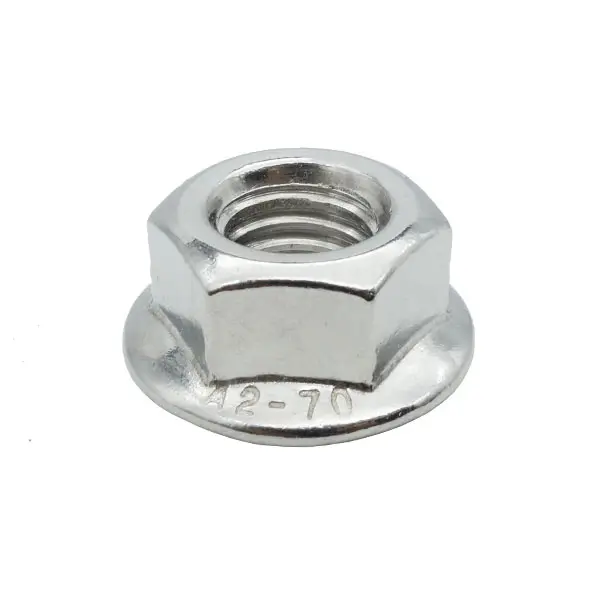
DIN 6923 Hexagon Flange Nuts
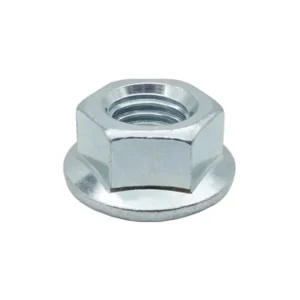
DIN 6923 hex flange nuts combine a hexagonal body with an integral flange to distribute clamping load and simplify metric fastening assemblies.
Standard
DIN 6923, ISO 4161
Material
Carbon Steel, Stainless Steel
Size Range
M5-M20
Product Information
Product Code
CB-DIN6923-HFN
Standard
DIN 6923, ISO 4161
Material
Carbon Steel, Stainless Steel
Grade
8, 10, A2-70, A4-80
Size Range
M5-M20
Surface Finish
Zinc Plated, Plain, Black Oxide, Hot Dip Galvanized
Packaging
Bulk packaging, carton packaging, pallet packaging, and custom packaging available.
Customization
Custom sizes, materials, surface finishes, and OEM requirements available.
Lead Time
Negotiable
Product Overview
DIN 6923 Hexagon Flange Nuts are metric hexagonal nuts with an integral circular flange at the bearing face. The flange increases the bearing area compared with a conventional hex nut and can eliminate the need for a separate washer in many fastening assemblies. The product is commonly known as a hex flange nut, flange nut, or, when serrated, a serrated hex flange nut. DIN 6923 is commonly cross-referenced with ISO 4161 for metric coarse-thread flange nuts.
The integrated flange makes these nuts useful where the fastener must distribute clamping force over a larger area without adding a separate washer. Serrated versions incorporate teeth on the underside of the flange. During tightening, the serrations engage with the mating surface and increase resistance to loosening caused by vibration. Plain flange versions provide a smooth bearing surface and are preferable where surface marking or controlled seating is important.
DIN 6923 flange nuts are commonly used with metric bolts and screws in machinery, automotive components, industrial equipment, metal structures, electrical equipment, and general mechanical assemblies. Standard dimensions cover common metric sizes, with M5 through M20 corresponding to the dimensional range specified by ISO 4161:2012.
For industrial purchasing, the specification normally needs to identify the thread size, material, property class, flange configuration, and surface finish. Carbon steel versions are widely supplied in property classes such as 8 and 10, while stainless steel versions are available in grades such as A2 and A4 depending on the required application. Zinc-plated steel is commonly selected for general industrial environments where additional corrosion protection is required.
Related Products
Ready to Source This Fastener?
Need a quotation, technical support, or custom fastener solutions? Complete the form below, and we'll provide the information you need for your project.