
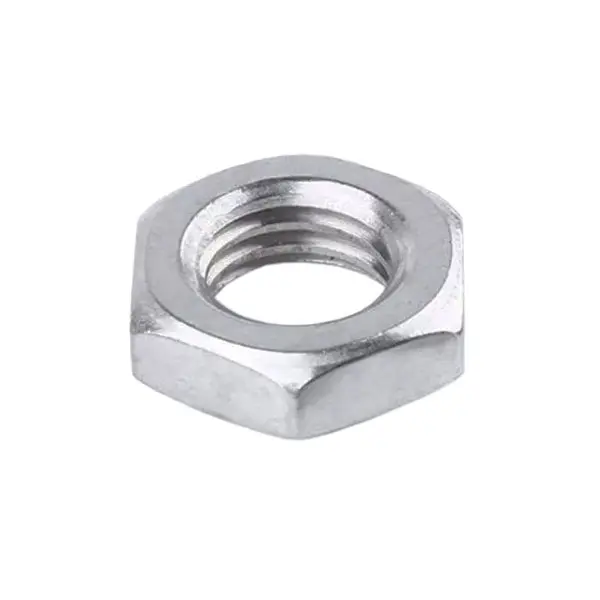
DIN 936 Hexagon Thin Nuts
DIN 936 hexagon thin nuts have a reduced height compared with regular hex nuts, making them useful where thread engagement and available space require a low-profile nut.
Standard
DIN 936, ISO 4035, ISO 4036
Material
Carbon Steel, Stainless Steel, Brass
Size Range
M8-M52, M8 × 1-M52 × 3
Product Information
Product Code
CB-DIN936-HTN
Standard
DIN 936, ISO 4035, ISO 4036
Material
Carbon Steel, Stainless Steel, Brass
Grade
Product Grades A, B
Size Range
M8-M52, M8 × 1-M52 × 3
Surface Finish
Plain, Zinc Plated
Packaging
Bulk packaging, carton packaging, pallet packaging, and custom packaging available
Customization
Custom sizes, materials, surface finishes, and OEM requirements available
Lead Time
Negotiable
Product Overview
DIN 936 Hexagon Thin Nuts are low-profile metric hexagon nuts with a reduced height compared with regular hexagon nuts. They are commonly known as thin hex nuts, low hex nuts, or flat hexagon nuts. The hexagonal external shape allows tightening with conventional spanners or sockets, while the reduced axial height helps conserve space in threaded assemblies.
DIN 936 is a withdrawn German standard covering thin hexagon nuts in metric sizes, including coarse and fine pitch threads. The historical standard covered sizes from M8 to M52, including fine pitch versions from M8 × 1 to M52 × 3. It was withdrawn without a direct replacement. For current thin hexagon nut specifications, ISO 4035 is the relevant modern international standard and is recommended as a reference where applicable.
The main difference between DIN 936 and DIN 934 is nut height. DIN 934 defines regular hexagon nuts, while DIN 936 defines a thinner, lower-profile form. A DIN 936 nut therefore occupies less axial space but has lower loadability than a regular nut. Current ISO 4035 also warns that thin nuts have reduced loadability and are not intended to provide resistance to thread stripping.
DIN 936 thin nuts are used in machinery, mechanical equipment, fixtures, maintenance work, and assemblies where space limitations or a low-profile connection are important. They can also be used as jam nuts in suitable applications, but should not be confused with dedicated prevailing torque lock nuts.
Related Products
Ready to Source This Fastener?
Need a quotation, technical support, or custom fastener solutions? Complete the form below, and we'll provide the information you need for your project.