
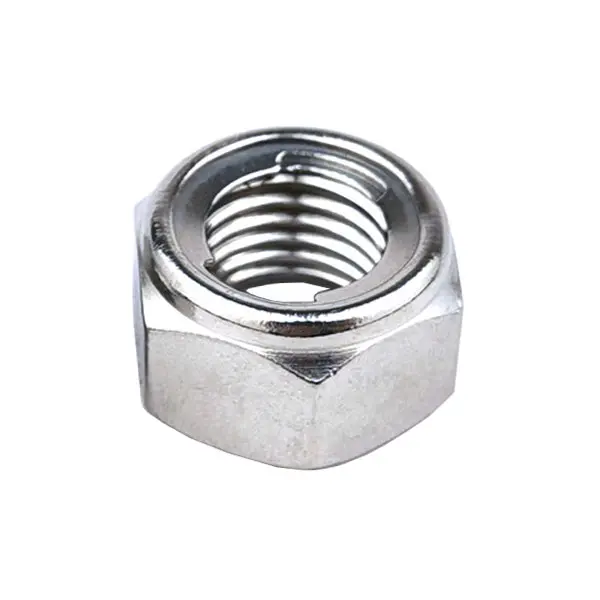
DIN 980 M All-Metal Self-Locking Nuts
DIN 980 M all-metal self-locking nuts use a separate metal insert to create prevailing torque and resist loosening in industrial bolted assemblies.
Standard
DIN 980 M, ISO 7042, ISO 10513
Material
Carbon Steel, Alloy Steel, Stainless Steel
Size Range
M3-M39
Product Information
Product Code
CB-DIN980M-SLN
Standard
DIN 980 M, ISO 7042, ISO 10513
Material
Carbon Steel, Alloy Steel, Stainless Steel
Grade
5, 8, 10, 12, A2-70, A4-80
Size Range
M3-M39
Surface Finish
Plain, Zinc Plated, Yellow Zinc Plated, Zinc Flake Coated
Packaging
Bulk packaging, carton packaging, pallet packaging, and custom packaging available.
Customization
Custom sizes, special materials, special surface finishes, and OEM requirements available.
Lead Time
Negotiable.
Product Overview
DIN 980 M All-Metal Self-Locking Nuts are hexagon nuts with a two-piece metal construction in which a separate metal locking element is incorporated into the nut. The locking element creates prevailing torque on the mating bolt or stud, helping resist loosening under vibration and dynamic loading. The product is also commonly described as a metal insert self-locking nut, all-metal lock nut, or prevailing torque type hexagon nut.
The designation Form M identifies the two-piece construction of the locking mechanism. Unlike a conventional hexagon nut, the nut body contains an additional metal element positioned in the prevailing torque section. During installation, this element interferes with the mating thread and generates additional friction. Because the locking element is metallic, the nut does not depend on a nylon or other polymer insert for its prevailing torque function.
The most important distinction between DIN 980 M and DIN 980 V is the way the locking function is produced. DIN 980 M uses a separate metal locking element, while DIN 980 V uses deformation of the nut itself as a single-piece construction. This makes the two forms mechanically different even though both belong to the DIN 980 family of all-metal prevailing torque nuts. Form M is therefore identified by its inserted metal locking component rather than by deformation of the main nut body.
DIN 980 M nuts are used in machinery, mechanical equipment, automotive assemblies, industrial equipment, and other bolted joints where a prevailing torque nut with an entirely metallic locking mechanism is required. They are available in different steel grades, stainless steel options, and surface finishes depending on the intended application and procurement specification.
DIN 980 M is a historical DIN designation. Related ISO standards include ISO 7042 for prevailing torque type all-metal hexagon high nuts with metric coarse threads and ISO 10513 for fine-thread versions. These standards should not be treated as automatically dimensionally interchangeable with the historical DIN designation; the required standard and dimensions should be confirmed when specifying replacement parts.
Related Products
Ready to Source This Fastener?
Need a quotation, technical support, or custom fastener solutions? Complete the form below, and we'll provide the information you need for your project.