
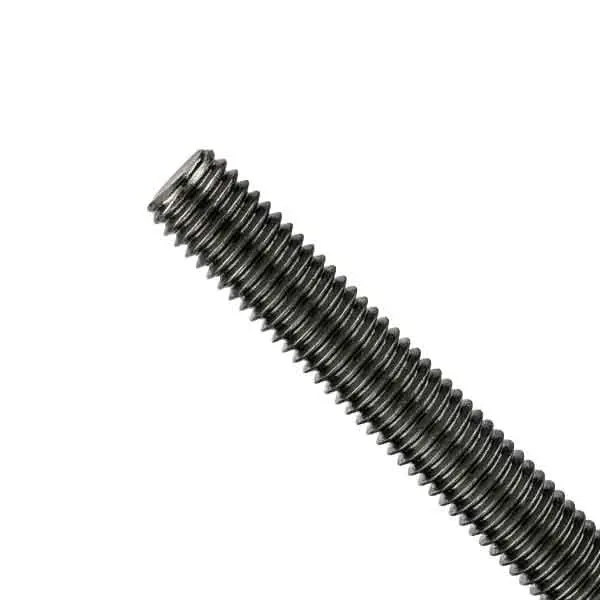
DIN 975 Threaded Rods
DIN 975 threaded rods are fully threaded metric rods used with nuts for fastening, suspension, spacing and support assemblies in construction and machinery.
Standard
DIN 975, corresponding current reference DIN 976-1
Material
Carbon Steel, Alloy Steel, Stainless Steel, Brass
Size Range
M2-M52
Product Information
Product Code
CB-DIN975-TR
Standard
DIN 975, corresponding current reference DIN 976-1
Material
Carbon Steel, Alloy Steel, Stainless Steel, Brass
Grade
4.8, 5.8, 8.8, 10.9, 12.9, A2-70, A4-80
Size Range
M2-M52
Surface Finish
Plain, Zinc Plated, Hot Dip Galvanized, Zinc Flake Coating
Packaging
Bulk packaging, carton packaging, pallet packaging, and custom packaging available
Customization
Custom sizes, lengths, materials, and surface finishes available
Lead Time
Negotiable
Product Overview
DIN 975 Threaded Rods are headless, fully threaded metric rods with continuous external threads along their working length. They are commonly known as threaded rods, threaded bars, all-thread rods, or studding. Unlike headed bolts or partially threaded studs, the continuous thread allows nuts, washers, couplers, and other internally threaded components to be positioned at different points along the rod.
DIN 975 is an important historical designation for metric threaded rods, but the standard is now withdrawn. DIN Media identifies DIN 975:1986-09 as withdrawn, while DIN 976-1 is used for the corresponding current form of metric fully threaded product. In commercial practice, however, DIN 975 remains a widely recognized designation, particularly for long threaded rods sold in standard lengths.
The characteristic format of DIN 975 threaded rods is a long, straight rod with no head and a continuous metric thread. Traditional DIN 975 dimensional tables cover nominal diameters from M2 to M52, with 1,000 mm length being the characteristic standard length; 2,000 mm and 3,000 mm rods are also commonly encountered in the market. The product may be supplied in different property classes and materials depending on the specified application, while thread form and tolerance should be confirmed against the applicable specification.
Threaded rods are used where a continuous threaded connection is more useful than a conventional bolt, including suspended assemblies, mechanical fastening, support structures, mounting systems, and connections requiring adjustable fastening positions. Their long threaded form also allows the rod to be cut to a required length, although cut-length requirements should be specified separately from the original DIN designation.
Related Products
Ready to Source This Fastener?
Need a quotation, technical support, or custom fastener solutions? Complete the form below, and we'll provide the information you need for your project.