
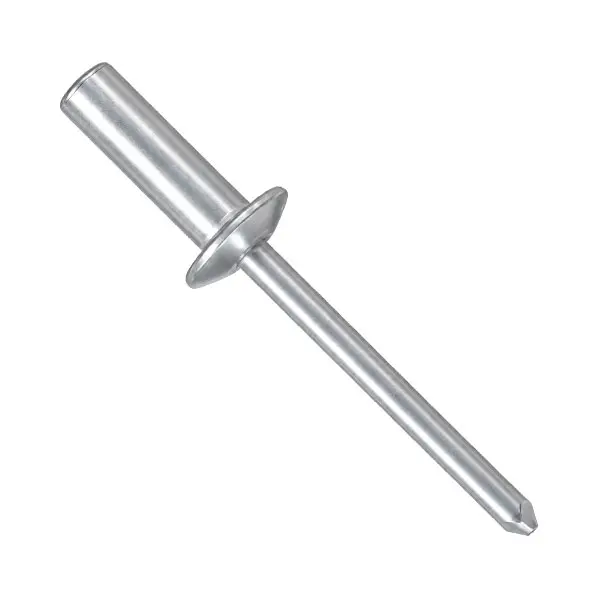
Closed End Blind Rivets
Closed end blind rivets feature a sealed cup-shaped body that creates an airtight, watertight joint and retains the full mandrel head inside the body after setting.
Standard
IFI 126, IFI 509, ISO 15973, ISO 15974, ISO 15975, ISO 16585
Material
Aluminum, Steel, Stainless Steel
Size Range
3.2 mm to 6.4 mm, 1/8" to 1/4"
Product Information
Product Code
CB-CEBR-BS
Standard
IFI 126, IFI 509, ISO 15973, ISO 15974, ISO 15975, ISO 16585
Material
Aluminum, Steel, Stainless Steel
Grade
Aluminum 5052, Aluminum 5056, Steel, A2 Stainless Steel, A4 Stainless Steel
Size Range
3.2 mm to 6.4 mm, 1/8" to 1/4"
Surface Finish
Plain, Zinc Plated, Painted
Packaging
Bulk packaging, carton packaging, pallet packaging, and custom packaging available.
Customization
Customization available. Custom sizes, special materials, and special surface finishes.
Lead Time
Negotiable
Product Overview
Closed end blind rivets are two-piece fasteners consisting of a hollow rivet body and a mandrel, distinguishable from the open end type by the configuration of the rivet body itself. Instead of being open at the blind end, the body terminates in a closed cup-shaped dome formed during the heading process. This solid end wall is the defining structural feature of the product.
That closed end performs two functions simultaneously. First, it creates a sealed barrier. When the rivet is set, the cup-shaped end deforms outward against the rear surface of the workpiece and, together with the rivet flange on the accessible side, encloses the joint. Liquid or vapor cannot pass through the centre of the rivet body because there is no open channel. This sealing capability is the reason closed end rivets are specified wherever moisture ingress, vapor migration, or dust penetration through the fastener body must be prevented.
Second, the closed end captures and retains the full mandrel head after the stem breaks at the breakneck groove. In an open end rivet the broken mandrel head falls away as waste; in a closed end rivet, the solid end wall prevents the head from escaping, so it remains permanently inside the rivet body. This full mandrel retention contributes directly to the joint’s load-bearing capacity. The retained mandrel head reinforces the body from within, raising the tensile strength of the installed rivet compared with an equivalent open end type.
Closed end blind rivets are supplied in the same material combinations as the open end family — aluminium body with aluminium or steel mandrel, steel body with steel mandrel, and A2 or A4 stainless steel — and in dome head, large flange head, and countersunk head styles. The sealing characteristic makes them suited to electrical enclosures, HVAC ducting, refrigeration cabinets, automotive underbody panels, outdoor equipment housings, and any assembly exposed to rain, washdown, or condensation. In catalogues and on purchase orders, they also appear as sealed blind rivets, watertight rivets, or closed end break stem rivets. The key selection factors are the grip range for the combined material thickness, the body diameter matched to the drilled hole, and the material combination appropriate for the service environment.
Related Products
Ready to Source This Fastener?
Need a quotation, technical support, or custom fastener solutions? Complete the form below, and we'll provide the information you need for your project.