
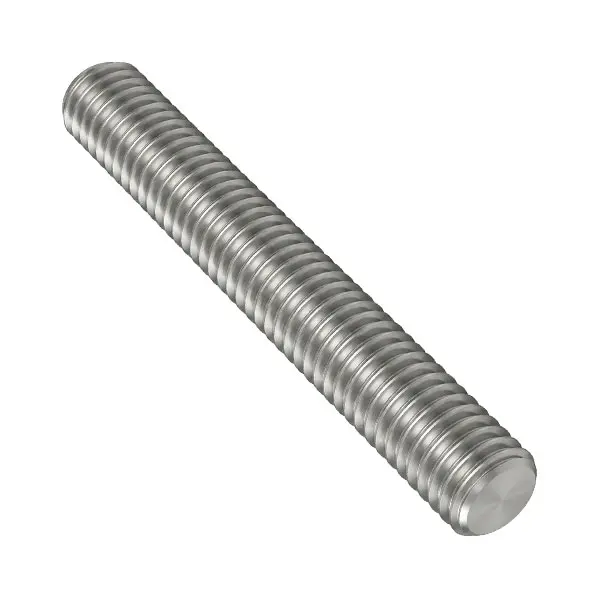
ASME B18.31.2 Continuous Thread Studs
ASME B18.31.2 continuous thread studs are fully threaded inch-series fasteners used with ASTM A193 bolting for flanged joints and pressure vessel assemblies.
Standard
ASME B18.31.2
Material
Carbon Steel, Alloy Steel, Stainless Steel
Size Range
1/4" to 4"
Product Information
Product Code
CB-ASMEB18312-CTS
Standard
ASME B18.31.2
Material
Carbon Steel, Alloy Steel, Stainless Steel
Grade
ASTM A193 B7, ASTM A193 B8, ASTM A193 B8M, ASTM A320 L7, ASTM A307 A, ASTM A307 B
Size Range
1/4" to 4"
Surface Finish
Plain, Zinc Plated, Hot Dip Galvanized, Xylan Coated
Packaging
Bulk packaging, carton packaging, pallet packaging, and custom packaging available.
Customization
Customization available. Custom sizes, special materials, and special surface finishes.
Lead Time
Negotiable
Product Overview
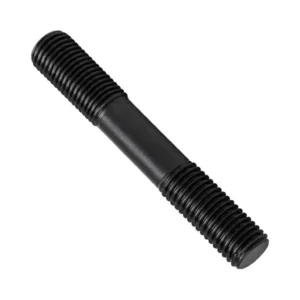
ASME B18.31.2 continuous thread studs are inch-series fasteners with thread running from end to end. There is no unthreaded shank and no reduced-diameter section. The full thread profile is continuous, so a nut can be positioned anywhere along the stud body. This is the defining physical characteristic of the product and the reason it is selected for flanged joints where nut location must be adjusted to suit the assembly.
In a flanged connection, the stud passes through aligned bolt holes in two flanges, a gasket, and sometimes a spacer or blind. The nut position is not fixed by a shank; it is set by where the nut is run down on the thread. A continuous thread stud therefore accommodates variations in flange thickness, gasket compression, and stack-up without requiring a different stud length for each combination. One stud length can serve multiple flange assemblies within its range. The thread also extends into the unclamped portion of the stud, so any exposed length beyond the nut remains threaded rather than showing a plain shank.
The ends of ASME B18.31.2 continuous thread studs are chamfered as standard, with rounded or 45° bevel ends available where installation conditions require them. Threads are unified inch series — UNC, UNF, or 8UN — with the 8-thread series used for diameters 1 inch and above. Nominal diameters run from 1/4 inch through 4 inches, and lengths are specified from 1 inch up to 48 inches depending on diameter. The product is commonly supplied in inch-series dimensions only; metric equivalents are covered by separate standards. In catalogues and purchase orders, these items also appear as all-thread studs, fully threaded stud bolts, or flange studs.
The typical installation is a raised-face or ring-joint flange in a piping system, where the stud is inserted through the bolt holes and two nuts are run down, one on each side, to compress the gasket. Continuous thread studs are used in refinery, petrochemical, and power piping where flanged joints are assembled and disassembled during maintenance. The selection consideration is the thread series and diameter required by the flange bolt hole, and the stud length needed to cover the flange thickness plus nut height plus any washer or spacer.
Related Products
Ready to Source This Fastener?
Need a quotation, technical support, or custom fastener solutions? Complete the form below, and we'll provide the information you need for your project.