
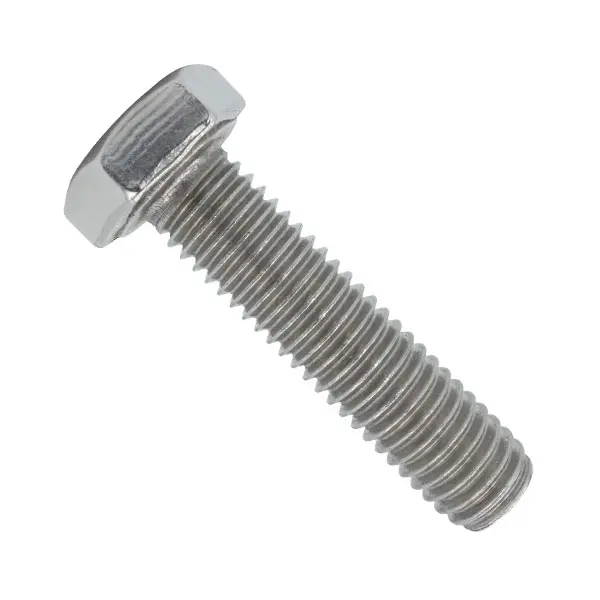
DIN 961 Hexagon Head Bolts with Fine Thread
DIN 961 hexagon head bolts with fine pitch thread are fully threaded fasteners for high-precision clamping in automotive, mechanical, and structural applications.
Standard
DIN 961, ISO 8676
Material
Carbon Steel, Stainless Steel, Alloy Steel
Size Range
M3 - M48
Product Information
Product Code
CB-DIN961-HB
Standard
DIN 961, ISO 8676
Material
Carbon Steel, Stainless Steel, Alloy Steel
Grade
8.8, 10.9, 12.9, A2-70, A4-80
Size Range
M3 - M48
Surface Finish
Zinc Plated, Hot Dip Galvanized, Black Oxide, Dacromet, Geomet, Plain
Packaging
Bulk packaging, carton packaging, pallet packaging, and custom packaging available
Customization
Customization available
Lead Time
Negotiable
Product Overview
DIN 961 specifies hexagon head bolts with fine pitch thread, fully threaded from the bearing surface to the thread end. These fasteners are the fine-thread counterpart to DIN 933, which covers standard coarse-thread fully threaded hex bolts. Buyers also encounter them under the designation ISO 8676 in international procurement documents.
The fine pitch thread is the defining feature of DIN 961. Compared with coarse-thread fasteners of the same nominal diameter, DIN 961 bolts provide a larger stress cross-section, higher preload control accuracy, and better resistance to self-loosening under vibration. This makes them a preferred choice in assemblies where clamping force stability and positional precision take priority over rapid assembly speed.
The distinction between DIN 961 and related standards matters in sourcing. DIN 933 covers fully threaded hexagon head bolts with standard coarse pitch. DIN 960 covers fine pitch hexagon head bolts with a partially threaded shank. DIN 961 combines the fine pitch thread with a fully threaded configuration. When a specification calls for DIN 961, substituting a DIN 960 or DIN 933 bolt changes thread engagement, load distribution, and joint behavior. DIN 601, an older standard for hexagon head bolts with coarse thread, has largely been superseded by DIN 931 and DIN 933 in current procurement practice, but it still appears in legacy drawings and replacement orders.
Typical applications include engine components, gearbox housings, flange connections on hydraulic systems, machine tool assemblies, and structural joints where vibration or cyclic loading is present. Fine thread bolts are also common in automotive drivetrain and chassis applications, where the finer pitch allows more precise torque-to-preload relationships.
Related Products
Ready to Source This Fastener?
Need a quotation, technical support, or custom fastener solutions? Complete the form below, and we'll provide the information you need for your project.