
What Are SAE J429 Grade 2, Grade 5, and Grade 8 Bolts Used For?

Fastener Knowledge
A collection of articles about fasteners, covering product types, standards, materials, specifications, terminology, applications, and related topics.
DIN 933 vs ISO 4017: What Is the Difference?
DIN 933 is withdrawn and ISO 4017 is current, and the two are not identical at every size. What changed at M10, M12, M14 and M22, and how to check a substitution.
What Is a DIN 933 Bolt? Meaning, Thread, and Standard
DIN 933 means a metric hexagon head bolt threaded up to the head — the fully threaded counterpart to DIN 931. The German standard is withdrawn and replaced by DIN EN ISO 4017, so here is what the name still tells you and what you have to specify separately.
DIN 931 vs ISO 4014: Differences and Interchangeability
DIN 931 and ISO 4014 describe the same partially threaded hex bolt, and their tables agree except at four sizes. Here is what changes at M10, M12, M14 and M22, and how to check a substitution before it reaches the line.
DIN 931 vs DIN 933: What Is the Difference?
DIN 931 is partially threaded and DIN 933 is fully threaded. They are equally strong at the same property class, so the choice depends on where the thread has to sit in the joint. This guide explains how to specify and substitute them correctly.
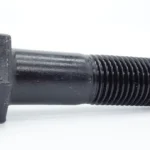
What Is DIN 931? Meaning, Standard, and Partial-Thread Bolt Design
DIN 931 means a metric hex head bolt with a partially threaded shank. The standard is withdrawn and replaced by DIN EN ISO 4014 — here is what the name still tells you, and the four sizes where it misleads.
Latest Posts