
What Are SAE J429 Grade 2, Grade 5, and Grade 8 Bolts Used For?

Fastener Knowledge
A collection of articles about fasteners, covering product types, standards, materials, specifications, terminology, applications, and related topics.
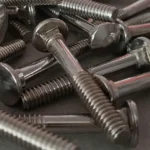
Carriage Bolt vs Coach Screw: What Is the Difference?
A carriage bolt (coach bolt) is a through-bolt held by a nut; a coach screw is a coarse-threaded timber screw driven from one side with no nut. Here is how to tell them apart and specify the right one.
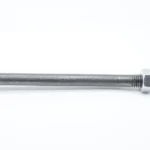
DIN 603 Equivalent Standards: ISO 8677 vs ISO 8678
DIN 603 has no equivalent ISO standard. ISO 8677 is withdrawn and ISO 8678 is a different small head bolt, so DIN 603 / ISO 8677 on a stock list is a market convention rather than a specification. What actually differs, and what to check before accepting a substitute.
DIN 931 vs DIN 601: Product Grade and Dimension Differences
DIN 931 is product grades A and B, DIN 601 is product grade C. What that means for strength, shank tolerance, head width at M10 to M22, and substitution.
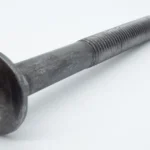
What Does DIN 603 Mean? Carriage Bolt Standard Explained
DIN 603 is the German standard for cup head square neck bolts, the carriage bolt or coach bolt of the trade, covering metric threads M5 to M20 in product class C. What it defines, what it leaves to the order such as property class, material and finish, the common names, and how to specify the…

What Are Hammer Drive Anchors? How They Work and Where to Use Them
How a hammer drive anchor works: the anchor body and preassembled drive pin, grip range and hole size, why it suits solid concrete and dense masonry, why hollow block and porous substrates fail, and when a different anchor is the better choice.
Latest Posts