
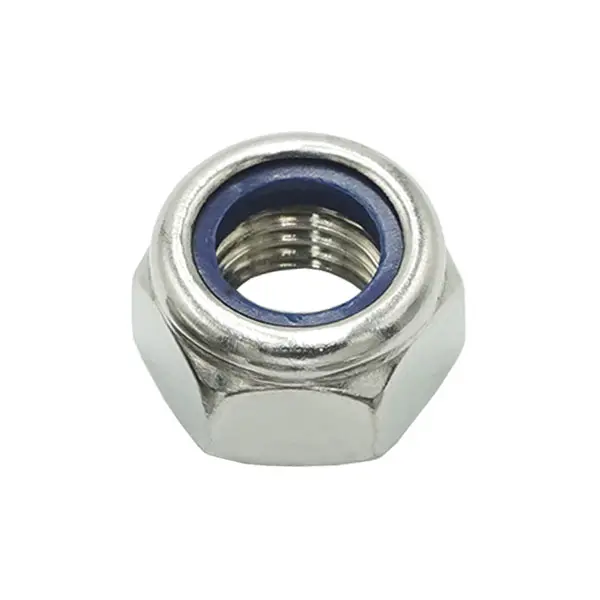
DIN 982 High Nylon Insert Lock Nuts
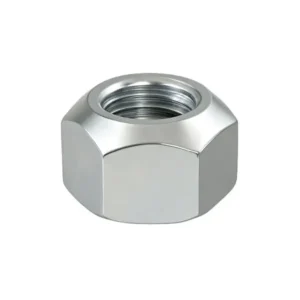
DIN 982 high nylon insert lock nuts are prevailing torque hex nuts with a nylon insert for vibration resistance in industrial bolted assemblies.
Standard
DIN 982, ISO 7040
Material
Carbon Steel, Alloy Steel, Stainless Steel options
Size Range
M5-M24
Product Information
Product Code
CB-DIN982-NILN
Standard
DIN 982, ISO 7040
Material
Carbon Steel, Alloy Steel, Stainless Steel options
Grade
8, 10 for steel, A2-70, A4-80 for stainless steel options, size-dependent
Size Range
M5-M24
Surface Finish
Plain, Zinc Plated, Yellow Zinc Plated, Zinc Flake Coated
Packaging
Bulk packaging, carton packaging, pallet packaging, and custom packaging available
Customization
Custom sizes, special materials, special surface finishes, and OEM requirements available
Lead Time
Negotiable
Product Overview
DIN 982 High Nylon Insert Lock Nuts are high-profile hexagon lock nuts with a non-metallic nylon insert that creates prevailing torque on the mating bolt thread. They are commonly known as High Nyloc Nuts, Nylon Lock Nuts, or Type P Nyloc Nuts. The high profile provides greater nut height than the thin DIN 985 type, making DIN 982 suitable where greater thread engagement is required.
The nylon insert is the defining locking element. As the bolt enters the insert, the nylon deforms around the thread and creates additional friction that resists rotation caused by vibration and repeated mechanical movement. This locking action does not require a separate washer, adhesive, or metal locking element. The nylon insert also reduces direct metal-to-metal contact within the locking portion of the thread.
DIN 982 nuts are commonly specified for machinery, automotive assemblies, equipment, construction hardware, and general industrial fastening. The standard is associated with metric high-type prevailing torque nuts, with sizes commonly specified from M5 to M24. ISO 7040 is the corresponding later international standard, although dimensional details should be checked when replacing a DIN 982 nut with an ISO 7040 product.
DIN 982 differs fundamentally from DIN 980 V and DIN 980 M. DIN 982 uses a non-metallic nylon insert to generate prevailing torque, while both DIN 980 forms use an all-metal locking mechanism. DIN 980 V is a one-piece metal nut in which deformation of the nut thread creates the locking effect. DIN 980 M uses a separate metal locking element within a two-piece nut construction. This makes DIN 982 the appropriate choice when a nylon-based locking element is preferred, while DIN 980 V or M may be considered where an all-metal locking solution is required.
The nylon insert is also a consideration for temperature and application conditions. Compared with all-metal prevailing torque nuts, nylon insert nuts have a more limited operating temperature range and should be selected according to the service environment.
Related Products
Ready to Source This Fastener?
Need a quotation, technical support, or custom fastener solutions? Complete the form below, and we'll provide the information you need for your project.